


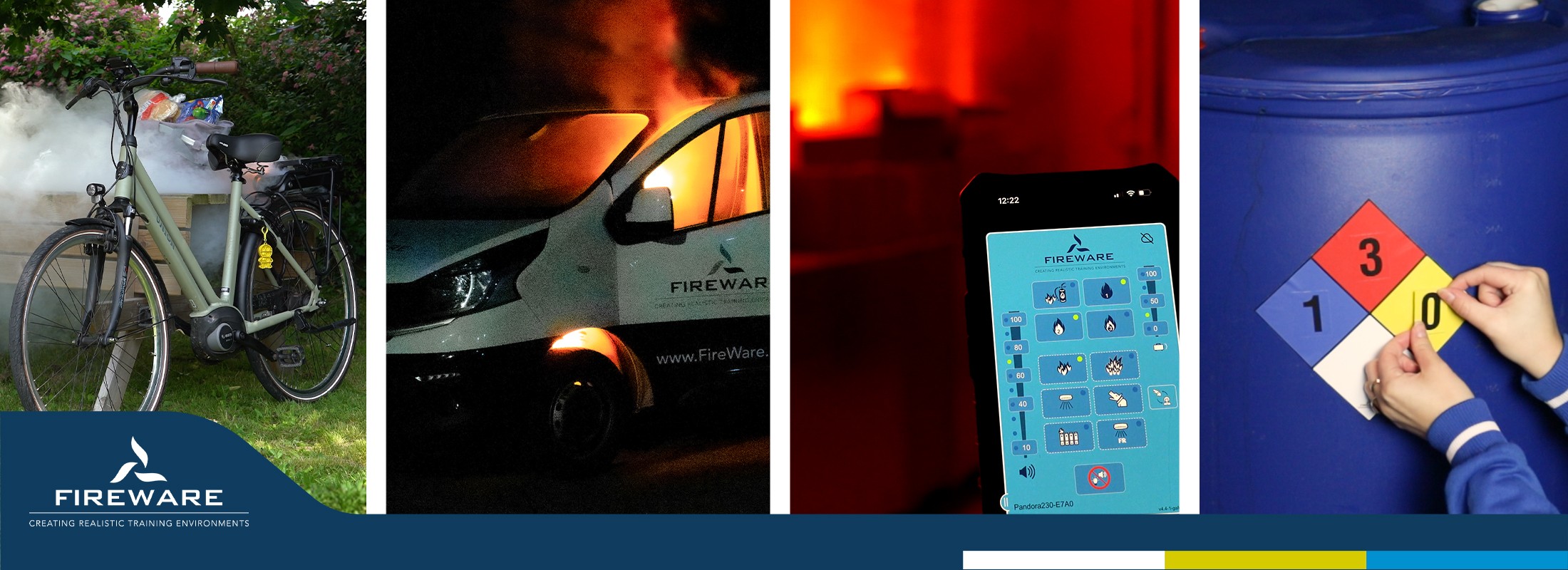
The final months of the year at FireWare are always all about the End-of-Year offers. A perfect moment to reflect on how our products came to be. Because behind everything we do lies a clear philosophy. It defines how we work and why we make what we make.
The philosophy
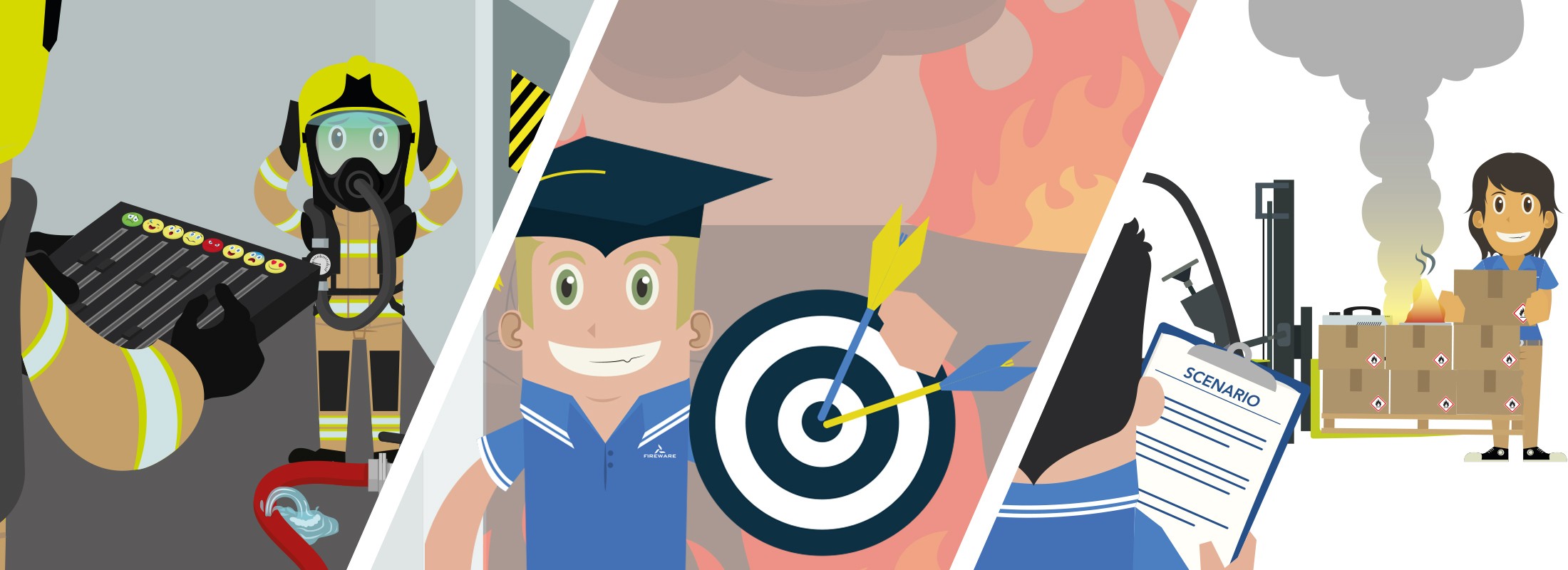
We believe that emergency response teams can be better prepared for real-life situations by training them more effectively. Because if, during a training, you learn how something should be done, but can’t apply it under the stress of a real incident—what have you truly learned?
An exercise in which people truly experience stress only succeeds when they momentarily forget that it’s an exercise. They need to feel as if it’s a real incident. Even though they rationally know it isn’t, their brain should no longer make that distinction. You achieve that by making every detail fit perfectly. We call that realistic staging.
Realistic staging is all about stimulating as many senses as possible. It’s not just about flames that look real, but also about the sound of crackling fire, the smell of smoke, and the heat you can feel. That’s what makes it convincing. And everything else in the exercise—such as role players, set design, and the scenario—has to be right as well. You’ve already been able to read more about that in our blogs over the past year.
From idea to product
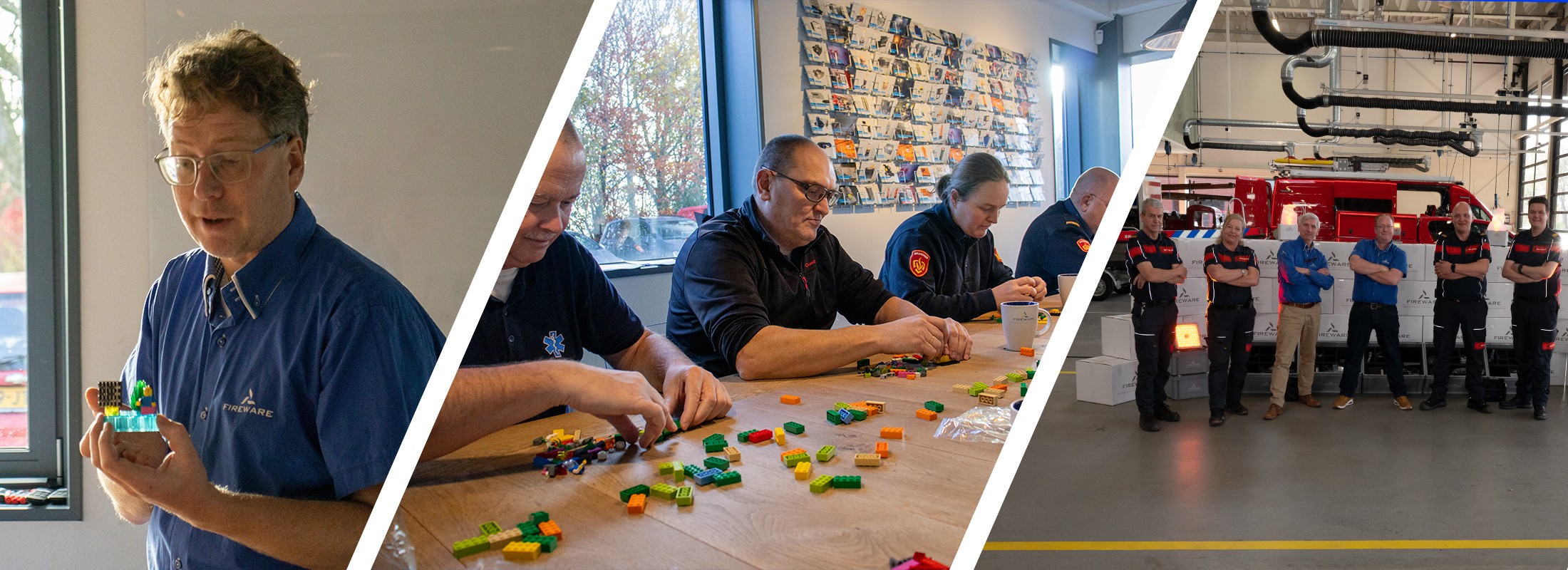
At FireWare, products aren’t created behind a desk—they’re born in the field. In conversations with training leaders, in the smoke of an exercise, or during a test at the fire station. We observe where people run into challenges and what they need to make their training more effective. Only then do we start building.
Sometimes an idea stems from a specific question, sometimes from frustration, and often from collaboration—where different disciplines come together. That’s how we create products that truly add value to the realistic training of emergency response teams. In this blog, we’ll take you behind the scenes of several development journeys of products you’ll now find in our End-of-Year offers.
The Pandora’s Box 230 – simple, dynamic staging
In a realistic exercise, you want to be able to respond to what happens in the moment. We call that dynamic staging. The fire flares up when oxygen is added. It dies down during extinguishing—but then steam appears. In the early days, training leaders managed that simply by turning devices on and off with multiple remote controls—until the moment came when they were holding so many controllers that keeping track became impossible.
Some teams started experimenting with professional theatre control systems. They can be powerful, but are often far too complex for a Fire Service or Emergency Response (ERO)exercise. We tried that too—and quickly moved away from it. Because technology should support you, not get in the way.
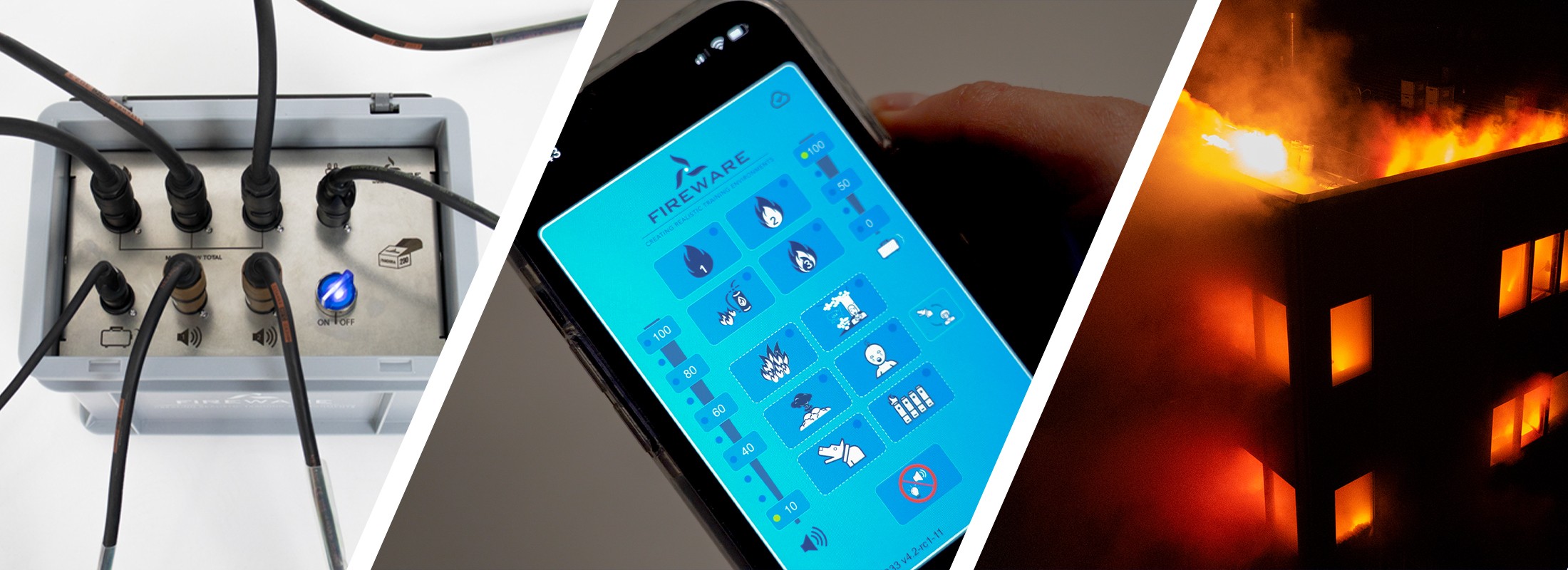
That’s why we started developing control systems that are simple yet powerful—perfectly tailored to the scenarios of emergency response teams. That’s how the… was born. Pandora's Box 230. Light, sound, and smoke can all be controlled directly from your own phone or tablet. The setup can easily be expanded across multiple rooms and floors—without complicated addressing or tricky connections. Just scan a QR code, connect, and start training.
That’s how we make complex technology accessible to every training leader—so you can focus on what truly matters: creating a convincing, meaningful exercise.
Apollo and Pandora’s Box V4 – technology in the service of people
More and more trainers are experimenting with interactive training methods such as VR. We’ve explored that too—but decided not to continue down that path.
VR can certainly be valuable for training procedures or getting familiar with equipment. But when it comes to training in a realistic environment—where you momentarily forget it’s an exercise—it still falls short. The issue isn’t how realistic something looks; our brains can fill in that part. The real challenge lies in how the environment responds. In a virtual world, everything reacts according to the rules of technology, not the unpredictable dynamics of reality.
In our tests, that repeatedly led to debate. Was the response successful or not? The technology gave the answer—not the instructor. Yet the instructor is the best sensor there is: a professional who understands the context, can assess behaviour, and makes complex judgments in the moment.
Still, the demand for interactive solutions remains—and understandably so. They can make training more efficient. Participants can practice more independently and perform more extinguishing attempts within the same amount of time. This helps reinforce actions more effectively.
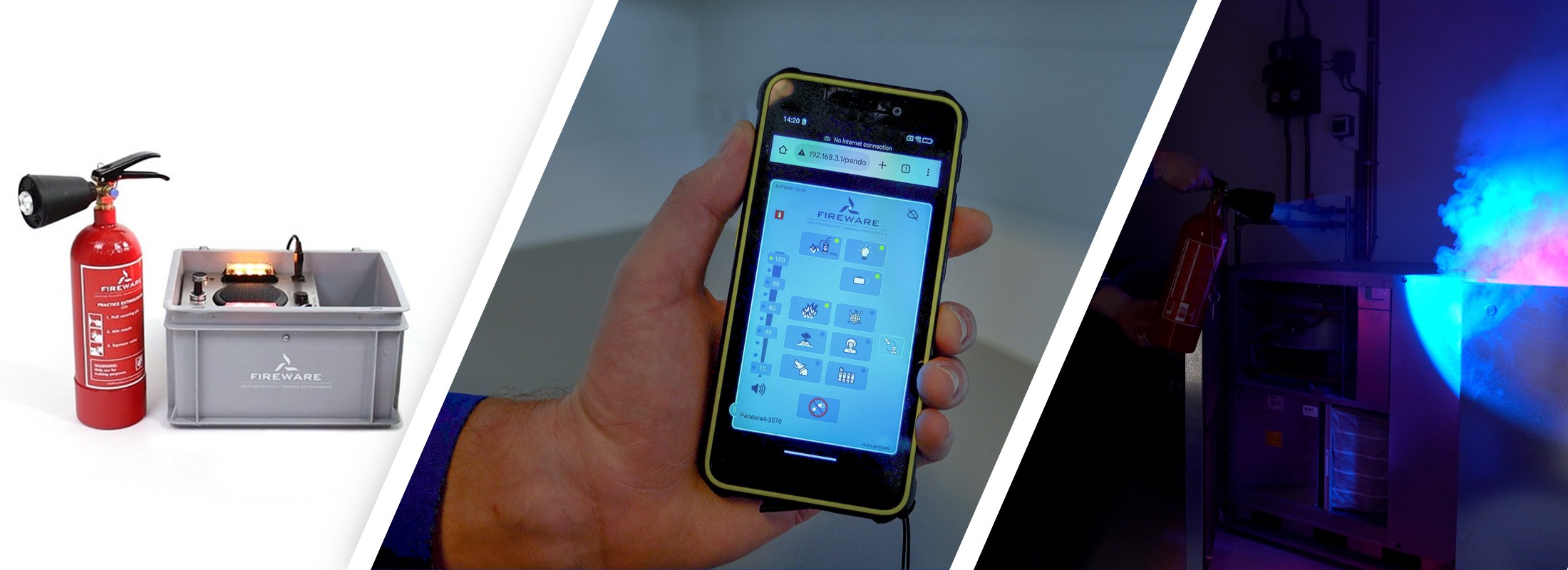
A great example of where that does work is in training with small extinguishing equipment. That’s where we got to work. We already had two strong products, the Pandora’s Box V4 and the Apollo LED training extinguishers—and we made them communicate with each other.
The Pandora’s Box V4 creates a realistic fire scene with light, sound, and smoke. The Apollo makes it possible to extinguish that fire—and it does so interactively. A proper extinguishing attempt actually puts out the flames. This creates an exercise where technology enhances the experience, without taking control away from the instructor.
The philosophy behind our training sets
At FireWare, we’ve developed several training sets. In these sets, we combine products that naturally work well together. This makes it easier for a training leader to have the right materials on hand and get started quickly.
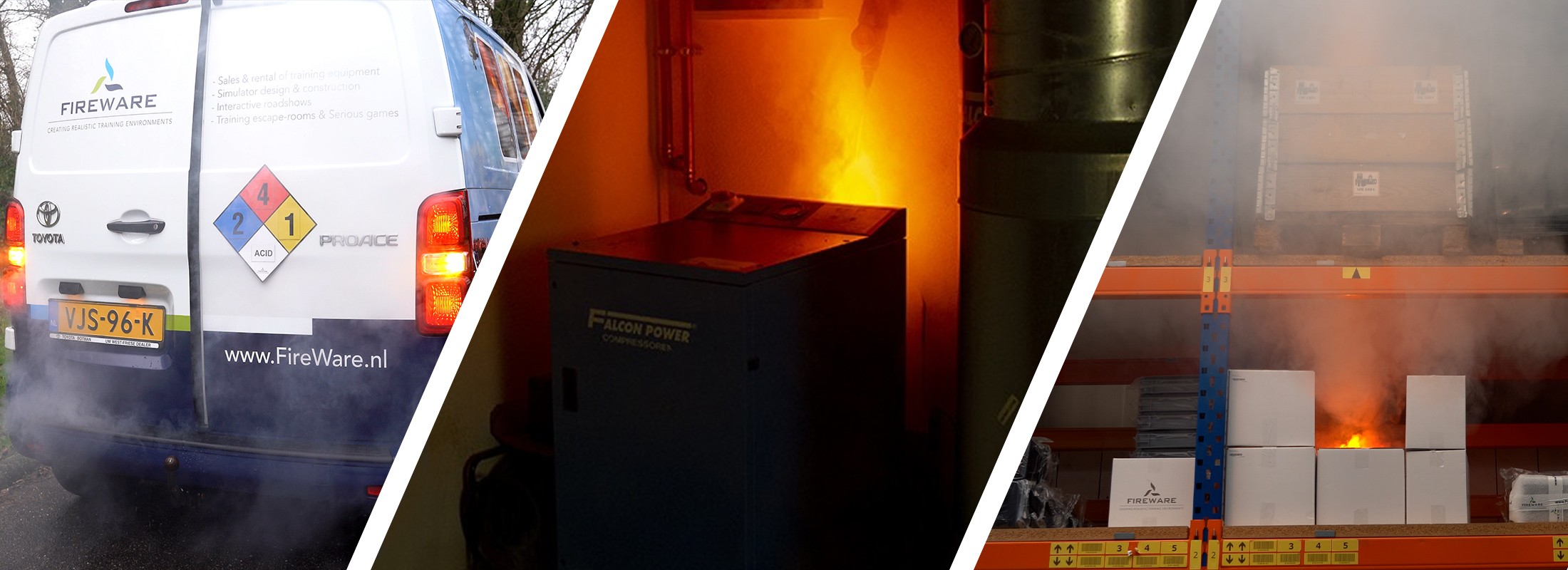
A good example of this is the Fire Simulation Kit V4. This set has now become the standard for realistic staging. It includes everything you need to create a small fire scene: light, sound, smoke, and scent—all combined in one practical kit.
Around the Pandora’s Box 230, we’ve assembled several sets, each aimed at a specific type of staging. Want to simulate a thermal runaway under a car? You can. Or need a kit to stage a large-scale fire? We’ve got that too.
Looking for a set but can’t quite find what you need? Let us know. Many of our sets were created in response to customer requests. Who knows—together, we might come up with the next great set that makes training even more realistic.
In conclusion
Starting November 1st, our End-of-Year offers will be live once again. It’s the perfect time to prepare for a new training year. But more importantly, it’s a moment to reflect on why we do what we do.
Our products are tools to make training better. And better training leads to better-prepared emergency response teams. That, year after year, remains at the heart of what drives us!


 FireWare