


Why better training rarely starts with bigger flames
“If you haven’t extinguished real flames, you haven’t really trained.”
It’s a statement we hear often. Sometimes spoken aloud, sometimes merely implied in conversations about training programs, exercise facilities, and training budgets. And to be fair: the idea is understandable. Real flames, real heat, real danger. It feels like the ultimate preparation for real-world incidents.
But that line of thinking is also too simplistic.
Anyone who wants to train realistically should first ask a different question. Not: how real does it look?
But: what is this exercise meant to achieve?
What are we actually training?
In most training programs, fire itself is not the learning objective. It is a means to an end. The real work almost always lies elsewhere:
reconnaissance
communication
working safely
teamwork
command and control
operating under time pressure
making decisions with incomplete information
dealing with stress, stimuli, and distraction
This applies just as much to Emergency Response Officers (ERO) and Emergency Response Teams (Workplace Emergency Response) as it does to the Fire Service (UK) or Fire Department (USA). The scale may differ, the context may differ, but the core competencies are surprisingly similar.
And this is precisely where the idea that training only becomes “real” with real flames begins to fall apart. Because the vast majority of these learning objectives can be trained perfectly well — and often even better — in a simulated environment.
Not because simulated fire is less realistic, but because it offers greater control, can be deployed at virtually any location and at any time, and is often more cost-efficient and sustainable.
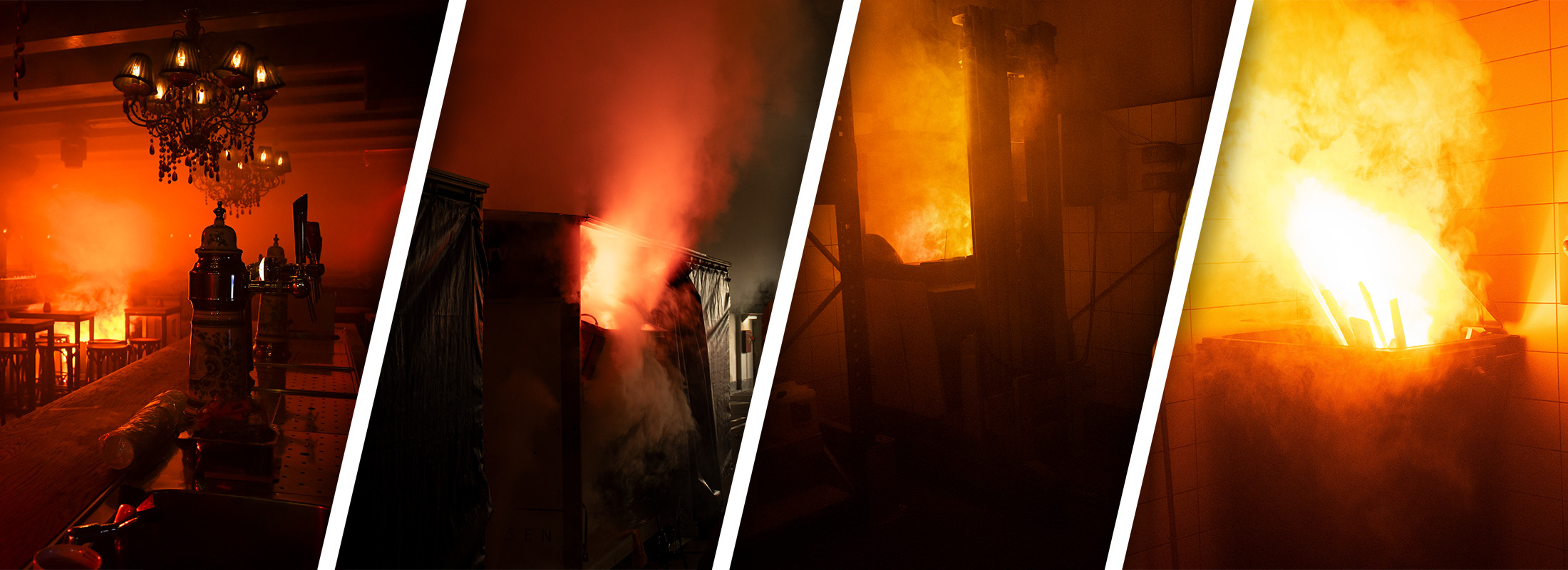
The power of simulated fire
Simulated fire, created using light, smoke, and sound, is still often viewed as an alternative — something you use when real fire is not allowed or not possible.
But that does it an injustice.
A well-designed simulated fire scenario enables things that are difficult to achieve with real fire:
Precisely timing when events occur
Repeating scenarios without compromise
Easy resetting between exercises
Maintaining focus on decision-making rather than survival
Training in locations that are relevant to the student or participant
Training at virtually any location, including sites where real fire and extinguishing residues are not permitted
Keeping the training environment clean
In a simulated environment, the Instructor, Training Leader, or Exercise Supervisor can actively steer the scenario. They can let it breathe — allow it to escalate or deliberately slow it down. Attention can be directed where it belongs didactically, rather than toward the largest flame.
This does, of course, require a serious setup. Light without smoke is not fire. Smoke without timing is decoration. Sound without context becomes a distraction. But when those elements come together, something interesting happens: participants start to believe it. The brain engages. Stress and focus arise naturally.
And that is exactly where learning takes place.
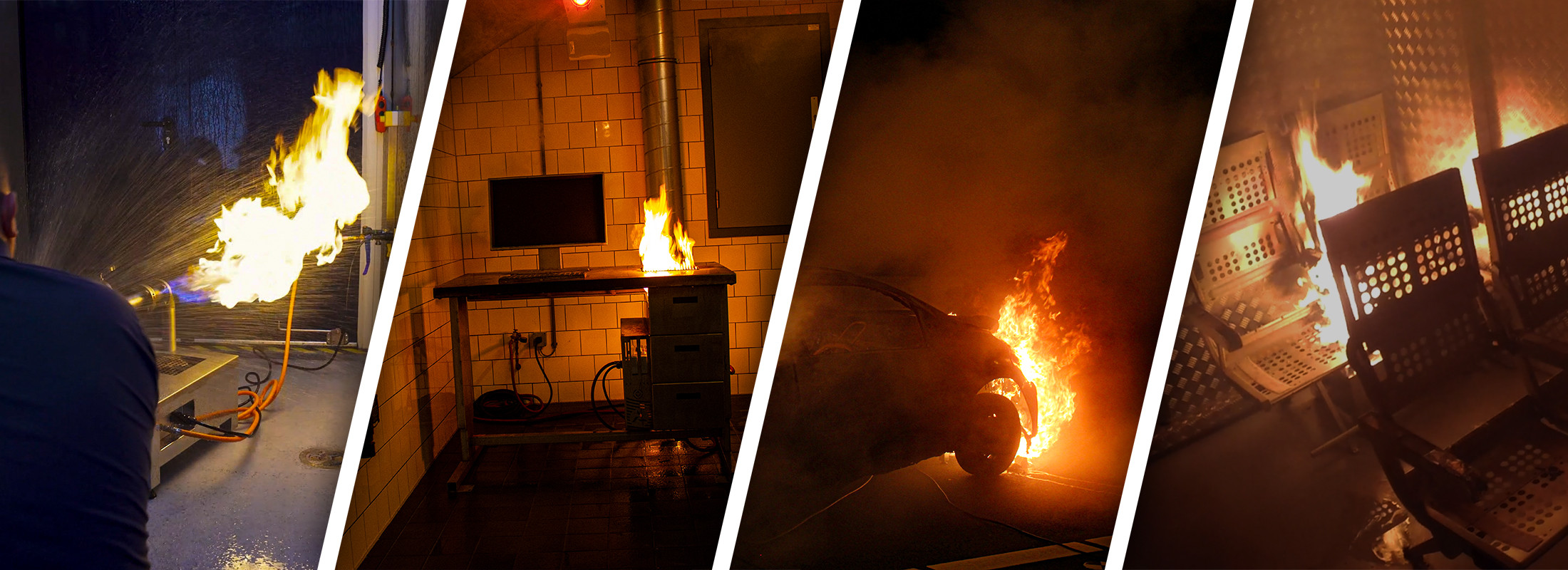
Where real fire has its value
This does not mean that real fire is unimportant. Quite the opposite.
Real flames do things that simulation can never fully replicate:
They radiate heat
They command respect
They heighten alertness
They respond to extinguishing agents
That effect is powerful — and sometimes essential.
But precisely because that effect is so strong, real fire also has a downside. Attention quickly shifts toward the fire itself. Procedures, communication, and cooperation can fade into the background. In addition, real fire is inherently less repeatable, less controllable, and costly in terms of time, resources, and environmental impact.
Which makes an important question unavoidable:
Do you want to train all of those learning objectives during that one costly moment with real fire?
Or would you rather reserve that moment for where real fire delivers the greatest value — such as extinguishing techniques, gas cooling, and coping with heat?
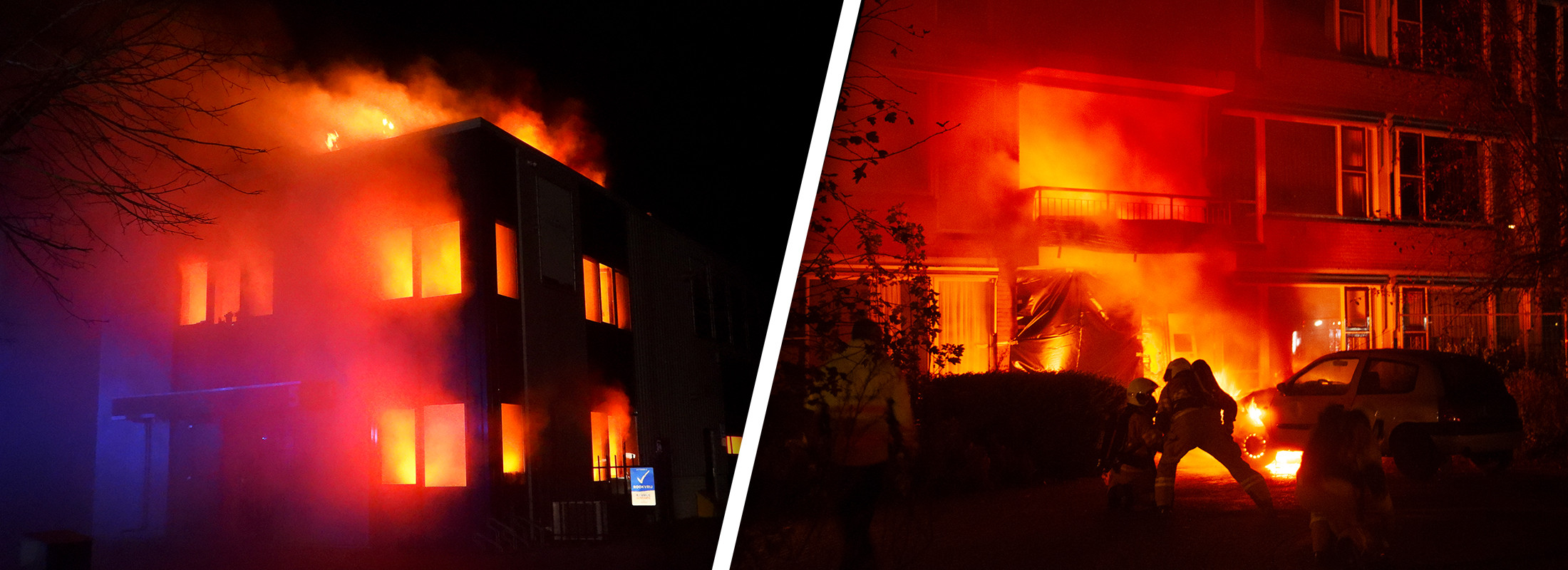
Hybrid scenography: not a compromise, but a reinforcement
This is where hybrid scenography comes into play — not as a trick, but as a design choice.
Hybrid scenography means deliberately combining real and simulated fire scenarios, each used where it has the greatest impact.
A practical example:
The initial impression upon arrival is defined by real flames outside
Inside, simulated fire, smoke, and sound are used
The firefighting team is fully alert from the very first second, while the Exercise Supervisor retains full control over the scenario
The real fire “colors” the entire exercise, increasing the credibility of everything that follows. At the same time, the training remains controllable, repeatable, and didactically strong.
In Workplace Emergency Response contexts, this approach is often smaller and more targeted: one controlled fire source combined with simulated effects. In Fire Service (UK) or Fire Department (USA) training, hybrid scenography is more commonly applied in larger scenarios, where exterior and interior environments serve different functions.
The underlying principle is always the same: resources are deployed deliberately, at the moment and location where they produce the greatest learning outcome.
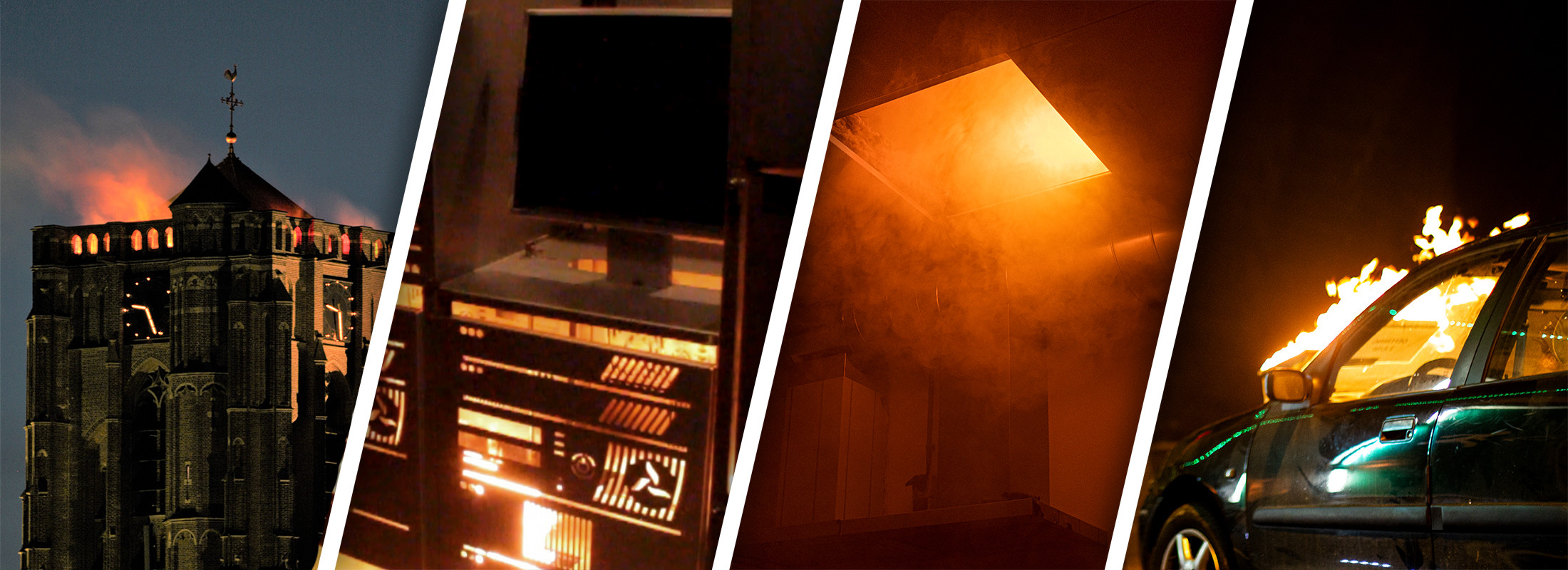
Better prepared for real-world incidents
Large fire training facilities with real fire are of tremendous value — there is no doubt about that. But they are scarce, costly, and environmentally demanding. Precisely for that reason, those moments should be used to their full potential.
Those who have already trained procedures, cooperation, and scenario-based thinking extensively in simulated environments simply gain more from training with real fire. Less time spent on the basics, more room for depth. Less surprise, more learning value.
And perhaps even more importantly: that preparation translates directly into real-world performance. Real incidents cannot be scripted either. Those accustomed to acting in dynamic, credible simulations are better equipped when it truly matters.
It’s not about fire — it’s about design
So the question is not whether you should train with real fire or simulated fire.
The question is whether your exercise delivers what it is meant to achieve.
Realistic training does not emerge from bigger flames, but from better choices. From taking learning objectives seriously. From viewing scenography as a professional discipline. And from deploying tools because they add value — not because they impress.
Real fire, simulated fire, and hybrid scenography are not opposites. They are tools. And as with any profession, the difference lies not in the tools themselves, but in how they are used.


 FireWare