


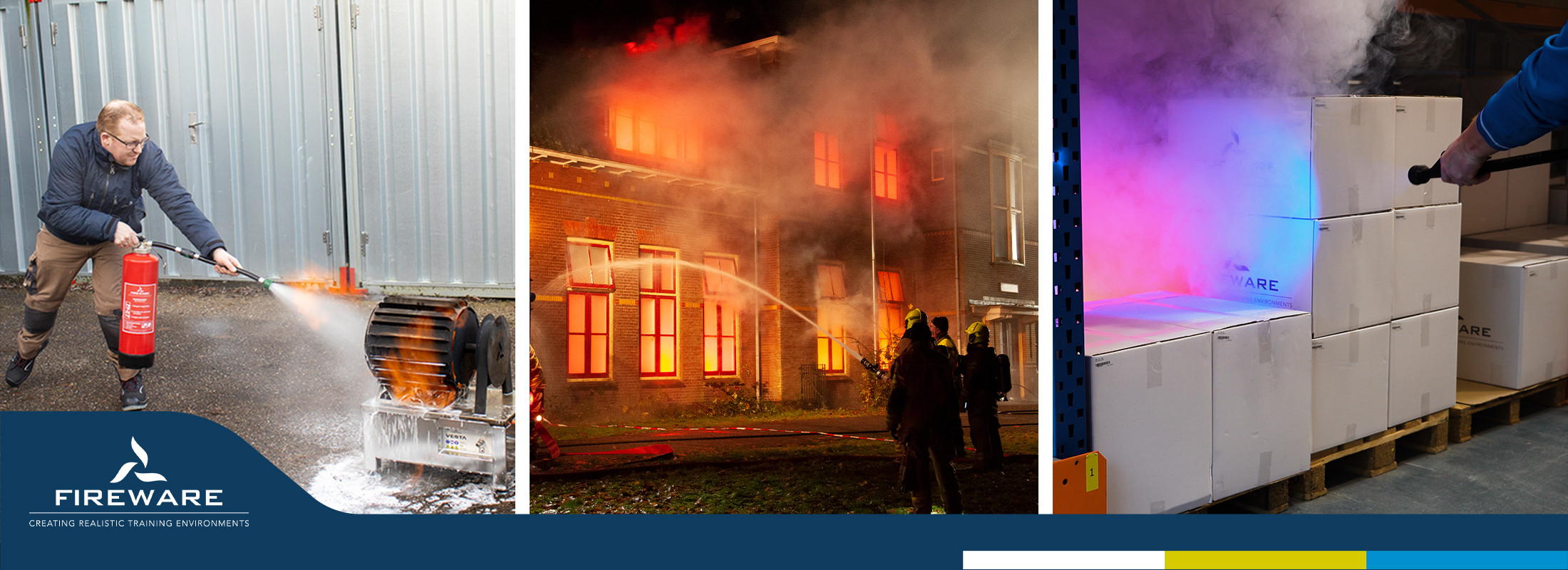
Clean training and PFAS-free firefighting: time for conscious choices
Realistic training is at the core of our profession. We want trainees to experience what stress does, how fire develops, and how limited visibility influences behavior. Without that experience, training lacks depth and effectiveness.
At the same time, there is a growing awareness that professional training today means more than just realism. It also means taking responsibility for health, the environment, and long-term operational readiness.
That is why, in this blog, we focus on two themes that are shaping the future of firefighting training: PFAS-free firefighting and clean training. Two separate topics, with one shared foundation: consciously managing health and environmental impact.
PFAS-free firefighting
For many years, fluorinated foam was the standard. It was effective and met the requirements of the time. It is now clear that PFAS is not future-proof. These substances hardly break down in the environment and pose health risks. As a result, they are being phased out across Europe and beyond. Many regions in the Netherlands have already switched to fluorine-free foam or are in the middle of that transition.
However, PFAS-free firefighting is not only a responsibility of the Fire Service (UK) / Fire Department (USA). Within the field of Workplace Emergency Response, foam extinguishers that are not PFAS-free are still regularly used. Despite tightened regulations, not all foam extinguishers are fluorine-free yet. The transition is underway and will continue in the coming years. In the meantime, it is important to be aware of what we use and how we can limit exposure during training.
Given the environmental and health impact of PFAS, it would make sense to switch to an alternative extinguishing agent sooner rather than later. In practice, however, such a transition takes time. Organizations need time, and they are being given room to adapt.
Training is different. Here, we can already make conscious choices today. We can immediately stop exposure to harmful substances when it is not strictly necessary.
Consider your training objective. What do you want your students or participants to learn? Do you actually need foam to achieve that goal? And does that foam truly need extinguishing properties?
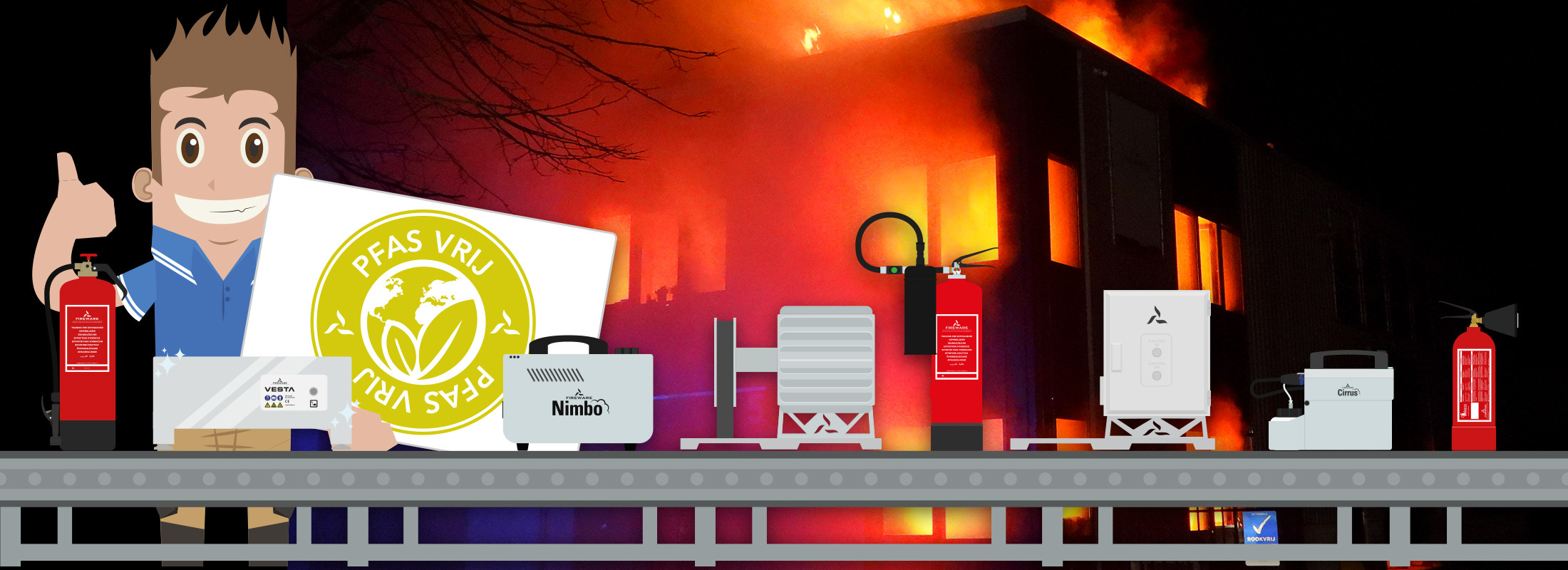
With refillable training extinguishers, such as the FireWare Neptune system, you can train extinguishing techniques using biodegradable training foam. This allows you to maintain control over both usage and environmental impact.
If your focus is primarily on procedures and decision-making, physical foam is often unnecessary. With Apollo LED extinguishers, you can train completely clean. The blue light beam simulates extinguishing. No residue, no environmental contamination, and suitable for use in almost any location, from fire stations to office environments.
PFAS-free firefighting does not mean less realism. It means handling resources and residual waste streams more consciously. And that change can be made today.
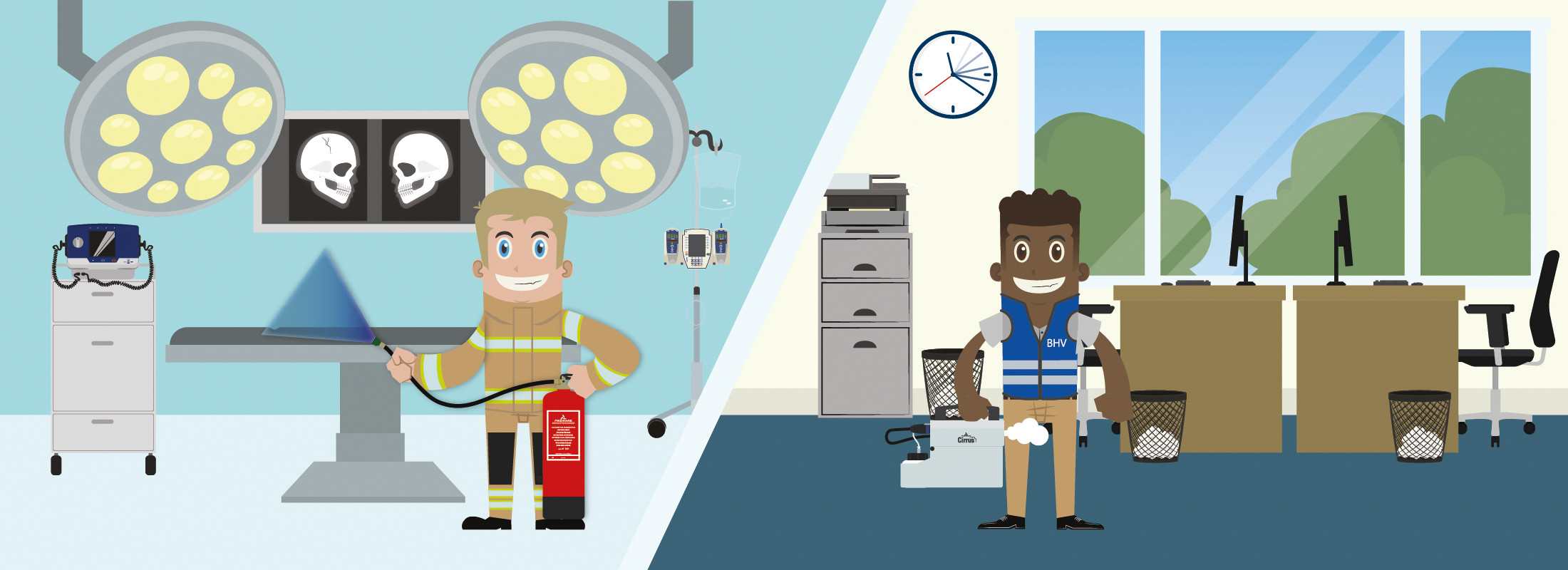
Clean training
Clean training directly aligns with what is receiving increasing attention within the Emergency Response Teams: working clean. However, it is just as relevant for Workplace Emergency Response organizations, where training sessions often take place in buildings that remain in active use.
Smoke from combustion is not just a training tool. Smoke is also environmental contamination. Smoke means exposure to toxic substances. Smoke results in contaminated personal protective equipment that must be cleaned. And every exposure adds up.
Live fire training, with real fire sources, remains essential. You can also read our blog about real fire versus simulated fire for more on this topic. But the question is how often and how intensively we need to expose people in order to achieve a learning objective.
This is where the strength of focused, simulated training becomes clear.
By keeping learning objectives simple and training them repeatedly in a controlled, cold environment, you increase the effectiveness of live fire exercises. Students or participants master the technique before entering a hot environment. As a result, live fire training becomes shorter, more focused, and more effective.
Less time in smoke.
Less cumulative exposure.
Less environmental impact.
More learning outcomes per exposure moment.
That is the essence of clean training.
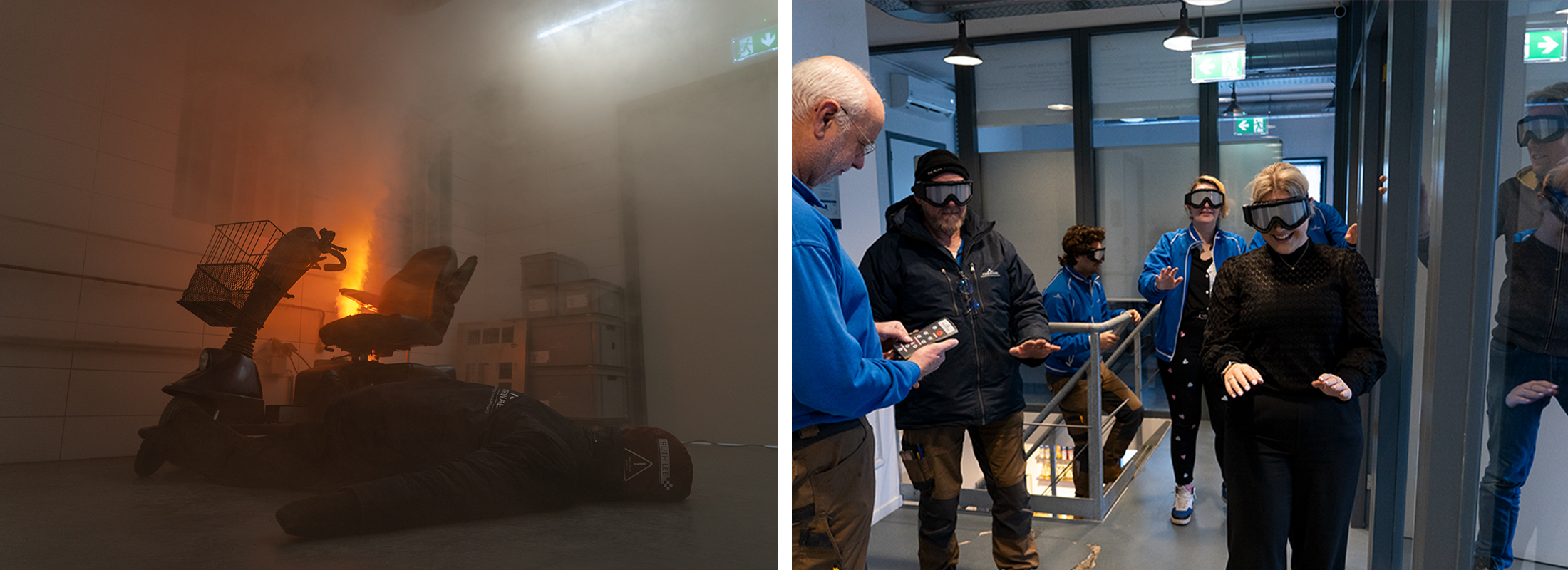
Smoke: from combustion, from a smoke machine, or even without smoke
Do you want to train limited visibility? Producing real smoke by burning materials is rarely necessary. Moreover, every instance of smoke exposure leads to contaminated equipment and additional cleaning requirements.
Modern smoke machines make it possible to deploy training smoke in a controlled way, without combustion by-products. This is an important element of clean training.
You can go even further with smoke simulation without actual smoke, for example by using FireWare Nebula Smoke Simulation Masks that dynamically restrict visibility. In this way, you can achieve your learning objectives without exposure. This makes training possible in locations where smoke is not an option, such as hospitals, server rooms, cleanrooms, or office environments.
Fire: combustion or simulation
The same consideration applies to fire.
Internationally, scenarios are still carried out in which materials are burned that are not intended for this purpose, including car tires. The resulting environmental impact and exposure are disproportionate to the learning objective.
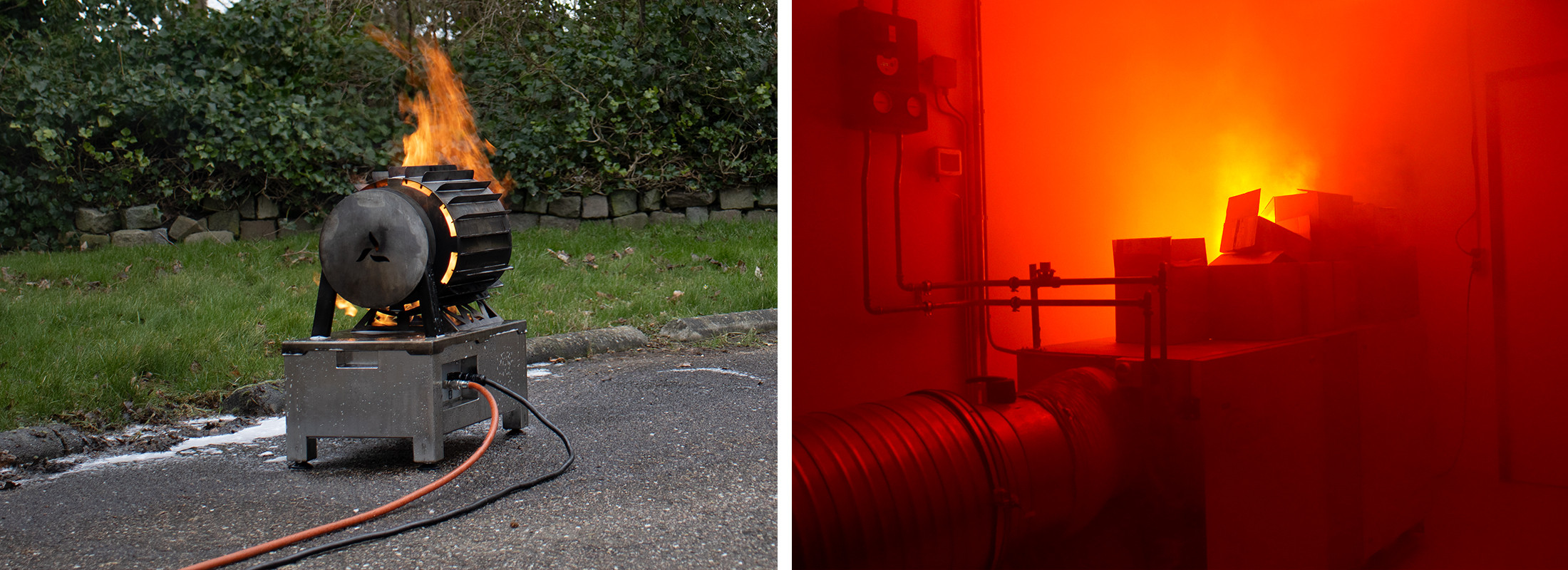
Gas-fired systems are a cleaner alternative to wood or other fuels. They make it possible to train with heat, both in Emergency Response Teams training centers and within Workplace Emergency Response training. Consider, for example, gas-fired extinguishing trainers such as the FireWare Vesta. With different add-ons, recognizable scenarios can be created that are significantly less harmful.
Simulated fire sources take this a step further.
By creating flames through a combination of training smoke and light projection, a highly realistic training environment can be achieved without exposure to toxic gases. Digital control enables dynamic scenarios in which prioritization and decision-making are central. By adding sound and scent, the scenario becomes credible and can be repeated endlessly without structural impact on people and the environment.
Getting more out of live fire training
Clean training does not mean that live fire training disappears. It means that live fire training is deployed more strategically.
By training more, better, and more purposefully in a simulated environment beforehand:
-
skills are developed in a repeatable way
-
mistakes are corrected without exposure
-
instructor workload is reduced
-
the effectiveness of every live fire session increases
Live fire training remains the final step — not the standard solution for every learning objective.


 FireWare